



Slide 1

He who knows only his own side of the case knows little of that. His reasons may be good, and no one may have been able to refute them.

But if he is equally unable to refute the reasons on the opposite side, if he does not so much as know what they are, he has no ground for preferring either opinion...

He must be able to hear them from persons who actually believe them...he must know them in their most plausible and persuasive form

Mill, John Stuart
On Liberty (1859)

Slide 2

Agents whose material, social, human capital, and cultural endowments give them different stakes in various states of the world (large or small role of effort; efficient or inefficient government; degree of trustworthiness of others) will process and interpret the same signals very differently...

This class of models also implies that people will seek interactions with those who think like them, and shun those whose words or actions provide signals and reminders that threaten valued "constructed realities"

Photo by César Couto on Unsplash

Slide 3

We can be blind to the obvious, and we are also blind to our blindness

Photo by Albert Amor on Unsplash

Slide 4

"Music is the pleasure the human mind experiences from counting without being aware that it is counting."

Leibniz, 1712

Quoted in Catherine Nolan, “Mathematics and Music,” Chapter 13 in Part VII (The Influence of Mathematics), in The Princeton Companion to Mathematics, edited by Timothy Gowers, June Barrow-Green, and Imre Leader, Princeton University Press, 2008.

Photo by Sean Oulashin on Unsplash

Slide 5

Lost
 
While exploring an unfamiliar intellectual forest
 
Wandering
 
Saw connections not seen before
 
I share some of these moments in An Intellectual Wanderer's Notebook

Photo by Eloy Martinez on Unsplash

previous arrowprevious arrow
next arrownext arrow

Welcome!

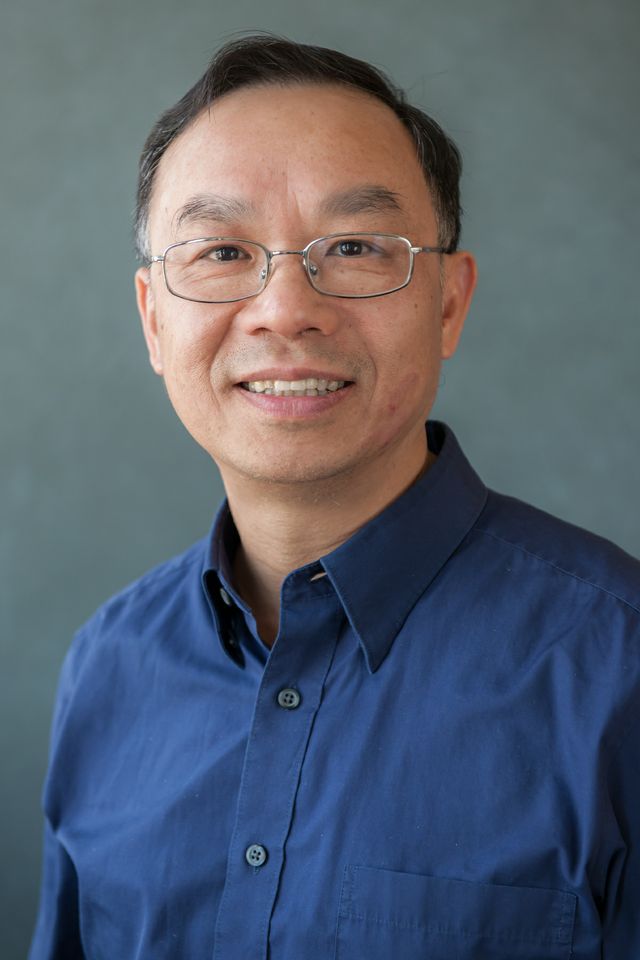
I am an associate professor in Monash University’s Department of EconomicsMonash Business School, Melbourne, Australia. The question that underlines all my intellectual activities is this: With our astonishingly vast differences in preferences, aptitudes, and interests, how can humans live together, reap the benefits of specialization and cooperation, without killing one another? In my blog An Intellectual Wanderer’s Notebook, I discuss questions that I am struggling to understand, and report some of my on-going thoughts. I am also working on a book tentatively entitled Human Interaction, Community, and Wellbeing.

Contact Details

Department of Economics Monash University Clayton, Vic 3800 Australia Email: Vai-Lam.Mui@monash.edu Phone: +61 3 9905 2349